Check out our customer reviews (4.9 / 5 average from 9,560 ratings)
Is your website accessible to people with disabilities? At Webo Creators, we provide professional ADA website accessibility audit services to identify digital barriers and improve website usability. Our specialists assess common accessibility issues, including keyboard navigation, color contrast, image descriptions, and form accessibility, helping you understand where improvements are needed.
Whether your website has navigation barriers, inaccessible forms, readability problems, or potential WCAG compliance gaps, our team can evaluate the available evidence and recommend practical improvements tailored to your website.
Our ADA website accessibility audit service helps businesses understand accessibility challenges and plan improvements that make their digital experiences more inclusive.
What our ADA accessibility audit can help identify:
An ADA website accessibility audit can help identify issues, but it cannot guarantee legal compliance or eliminate every accessibility risk. Our role is to provide actionable findings, practical recommendations, and guidance for improvement.
REQUEST ACCESSIBILITY AUDIT
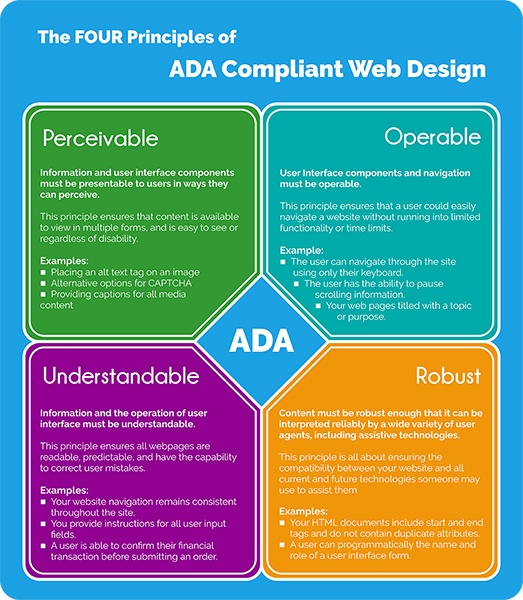
Website accessibility problems can prevent people with disabilities from navigating pages, understanding content, or completing important tasks. Webo Creators provides ADA website accessibility audit services to identify potential barriers, assess relevant WCAG criteria, and help businesses understand which improvements their websites may need.
Our specialists examine website elements that can affect accessible browsing, including page structure, interactive controls, and assistive technology compatibility. Learn more about our website development services for building more accessible digital experiences.
If your website needs improvements to its visual layout and usability, explore our UI/UX design services to support clearer navigation and more inclusive user journeys.
Our accessibility audit can cover:
An accessibility audit helps you understand potential barriers and plan corrective action, but it does not guarantee ADA compliance or prevent legal claims. Our findings support informed decisions about website accessibility improvements and ongoing testing.
DISCUSS YOUR ACCESSIBILITY AUDITWe examine website pages and interactive elements to identify potential accessibility barriers affecting visitors with disabilities.
Assess relevant Web Content Accessibility Guidelines and highlight potential accessibility gaps requiring further review or corrective action.
Evaluate keyboard navigation, focus indicators, and interactive controls to uncover obstacles for visitors who cannot use a mouse.
Identify potential problems with color contrast, alternative text, page structure, form labels, and accessible names for interactive elements.
Examine relevant screen reader compatibility and accessible content behavior to help uncover barriers during common website tasks.
Receive actionable findings and prioritized recommendations to guide website accessibility improvements and support ongoing website development .
Explore illustrative accessibility audit scenarios showing how businesses can identify digital barriers, evaluate WCAG-related issues, and prioritize website improvements.
An illustrative audit scenario examines menus, interactive controls, and keyboard focus behavior to identify obstacles for visitors who navigate without a mouse.
A sample assessment investigates heading hierarchy, meaningful link names, image alternative text, and form labels to uncover barriers experienced by screen reader users.
This illustrative review focuses on text contrast, readable typography, visible focus indicators, and clear content presentation to help identify potential visual accessibility problems.
Looking for a professional ADA website accessibility audit ? Webo Creators reviews websites for accessibility barriers that may affect people with disabilities, including issues with navigation, images, forms, keyboard access, and readable content. Contact our team to discuss your website, identify potential accessibility concerns, and determine the appropriate audit scope for your business.
Our website accessibility audit can include a review of relevant website development elements and WCAG accessibility criteria to help identify areas that may need improvement. We assess common usability barriers and provide practical recommendations for making website content and functionality more accessible across different devices and assistive technologies.
Whether you operate a business website, an online store, or a service platform, an ADA accessibility audit can help you understand potential compliance risks and prioritize improvements. Share your website URL and accessibility concerns with Webo Creators to discuss the evaluation process, review findings, and plan suitable remediation steps. An audit can support accessibility improvements but does not guarantee legal compliance or eliminate every risk.
Looking for a website accessibility assessment? Discuss ADA audit requirements, WCAG testing options, potential accessibility barriers, and recommended improvements with our team.
Refer businesses seeking ADA website accessibility audits and discuss referral opportunities for accessibility assessment projects with our team.
Concerned about website accessibility barriers? Webo Creators offers professional ADA website accessibility audit services to identify potential usability issues, evaluate relevant WCAG criteria, and help businesses make their websites more accessible to people with disabilities.
Whether you need an ADA website accessibility audit , keyboard navigation testing, website development improvements, or an assessment of forms, images, color contrast, and screen reader compatibility, our team can help identify accessibility concerns and recommend practical improvements.
From initial accessibility testing to detailed audit findings, we help businesses understand which website elements may require attention and how to prioritize remediation. Our evaluation can support ongoing accessibility improvements, although an audit alone cannot guarantee legal compliance or eliminate every accessibility risk.
Contact Now
Choose our ADA Website Accessibility Audit service to identify accessibility barriers that may prevent people with disabilities from using your website. Webo Creators reviews website elements for common accessibility issues involving keyboard navigation, image alternative text, form labels, color contrast, and accessible page structure.
Our website accessibility audit helps identify potential WCAG compliance gaps, including issues affecting screen reader users, keyboard-only navigation, and users with visual or motor impairments. We provide actionable findings to help your team understand accessibility problems and prioritize appropriate website improvements.
Whether you manage a business website, an online store, or a service-based website, our ADA accessibility testing can help you plan practical remediation steps. We focus on usability, accessibility best practices, and alignment with relevant WCAG guidelines without guaranteeing legal compliance or claiming that an automated audit alone detects every accessibility issue.
Get StartedAn ADA website accessibility audit evaluates how effectively a website can be used by people with disabilities. It identifies potential accessibility barriers involving keyboard navigation, screen reader compatibility, color contrast, form labels, images, and page structure. A professional ADA website accessibility audit helps businesses understand potential compliance risks and prioritize improvements based on recognized accessibility standards.
An ADA compliance website audit helps businesses discover digital accessibility barriers that may prevent users with disabilities from accessing online information, products, or services. Identifying these issues can support more inclusive website experiences, improve usability, and help organizations evaluate potential legal and accessibility risks. Audit findings also provide a practical starting point for planning website accessibility improvements.
An ADA website accessibility audit examines common barriers such as missing alternative text, inaccessible navigation menus, insufficient color contrast, incorrect heading hierarchy, unlabeled form fields, inaccessible buttons, and keyboard interaction problems. Depending on the audit scope, testing may also cover screen reader behavior, multimedia accessibility, error messages, and interactive website components to identify areas requiring remediation.
The cost of an ADA website accessibility audit depends on website size, page complexity, interactive features, testing depth, and the level of reporting required. A small business website may need a different audit scope than a large ecommerce platform or enterprise website. Requesting an assessment of your website's pages and functionality helps determine an appropriate audit scope and service cost.
The time required for an ADA website accessibility audit varies according to the number of unique page templates, interactive elements, forms, documents, and accessibility issues that need investigation. A smaller website may be assessed more quickly than a complex platform with extensive functionality. Manual accessibility testing, automated scans, and detailed reporting can also affect the overall audit timeline.
An ADA website audit evaluates accessibility concerns in the context of the Americans with Disabilities Act, while a WCAG accessibility audit tests a website against the Web Content Accessibility Guidelines. WCAG provides technical success criteria commonly used to evaluate digital accessibility. The two are closely related, but they are not identical: meeting a particular WCAG level does not automatically guarantee compliance with every applicable legal requirement.
The appropriate WCAG version and conformance level depend on the applicable requirements, project scope, and organization's accessibility goals. WCAG 2.1 and WCAG 2.2 are commonly used references for evaluating website accessibility, with Level AA frequently serving as a target. An accessibility audit should clearly identify the guidelines and success criteria used so that businesses understand the scope and limitations of the assessment.
Automated accessibility testing tools can identify certain technical problems, including some contrast failures, missing accessible names, and markup errors. However, automated scans cannot reliably evaluate every accessibility requirement or determine whether all website interactions work for people with disabilities. A thorough ADA website audit combines automated testing with manual review, keyboard testing, assistive technology checks, and human evaluation where appropriate.
An ADA website accessibility audit can uncover problems such as images without meaningful alternative text, low text contrast, keyboard traps, inaccessible dropdowns, confusing headings, missing form instructions, and poorly identified links. It may also reveal captions or transcript gaps, inaccessible PDF documents, and screen reader compatibility concerns. The final findings depend on the website's features and the testing methods used.
Before an ADA website accessibility audit, identify your important pages, navigation menus, contact forms, checkout processes, downloadable documents, and other interactive features. Provide access to relevant staging environments or test accounts when needed. Review existing accessibility reports and known user issues, and document any recent website changes. This preparation helps auditors understand the website's functionality and establish a useful testing scope.
No. An ADA website accessibility audit can identify potential barriers and provide recommendations, but an audit alone cannot guarantee legal compliance or prevent lawsuits. Legal obligations depend on the circumstances, applicable laws, and other relevant factors. Businesses should address identified issues, maintain accessible website practices, and consult a qualified legal professional when they need advice about their specific compliance responsibilities.
An ADA website accessibility audit report typically documents identified accessibility issues, affected pages or components, relevant accessibility criteria, testing observations, and recommended corrective actions. Depending on the service, findings may include issue severity, supporting evidence, and remediation guidance for developers and content teams. A well-organized report helps businesses prioritize accessibility fixes and track progress toward improved website usability.
Fixing ADA website audit findings starts with prioritizing barriers according to their impact on users and the affected functionality. Common remediation tasks include adding appropriate alternative text, improving contrast, correcting heading structure, labeling form controls, and making interactive elements keyboard accessible. Developers should retest corrected components and perform regression testing to confirm that improvements work across relevant pages and user interactions.
Small businesses can benefit from an ADA website accessibility audit because their websites may contain the same types of barriers found on larger platforms. The legal obligations applicable to a business depend on its circumstances and relevant law. Reviewing website accessibility can help small business owners identify usability problems, improve access to online services, and plan practical corrections based on their website's needs.
An ADA website accessibility audit can help businesses identify and address digital accessibility barriers before they remain unresolved or affect more users. Documented findings, corrective action plans, and ongoing testing can support a more structured accessibility program. However, no audit or remediation service can eliminate the possibility of legal claims or guarantee a particular legal outcome.
Yes. When a website serves mobile users, an effective accessibility assessment should consider its responsive layouts, touch interactions, mobile navigation, form controls, text resizing, and compatibility with relevant assistive technologies. Testing mobile experiences can reveal issues that may not appear on desktop screens, helping businesses improve access for users with different devices, interaction methods, and accessibility needs.
An ADA accessibility audit evaluates a website to identify barriers and recommend improvements to its underlying code, content, and functionality. An accessibility overlay adds a software layer that attempts to modify or enhance certain user interactions. These approaches are not equivalent, and an overlay does not automatically resolve every accessibility problem. A comprehensive accessibility strategy should address underlying barriers and validate the website through appropriate testing.
The appropriate audit frequency depends on how often your website changes, the complexity of its features, and your organization's accessibility requirements. An initial audit establishes a baseline, while follow-up testing can assess fixes and detect newly introduced barriers. Websites with frequent content releases, redesigned interfaces, or new interactive features should incorporate accessibility checks into their development and maintenance workflows.
An ADA website accessibility audit can reveal usability improvements that also support a clearer website structure, descriptive links, meaningful headings, and better-organized content. Some improvements may help search engines understand page content, while accessible navigation and readable layouts can benefit visitors. Accessibility work does not guarantee higher rankings, and SEO performance still depends on many separate technical, content, and search-quality factors.
To request a professional ADA website accessibility audit, prepare your website URL, identify the pages and user journeys that matter most, and explain any accessibility concerns you have already discovered. Discuss the proposed testing methods, WCAG evaluation criteria, reporting format, and remediation support before choosing a service. A clearly defined audit scope helps you understand the assessment process and plan practical improvements for a more accessible website.
© Webo Creators. All Rights Reserved.